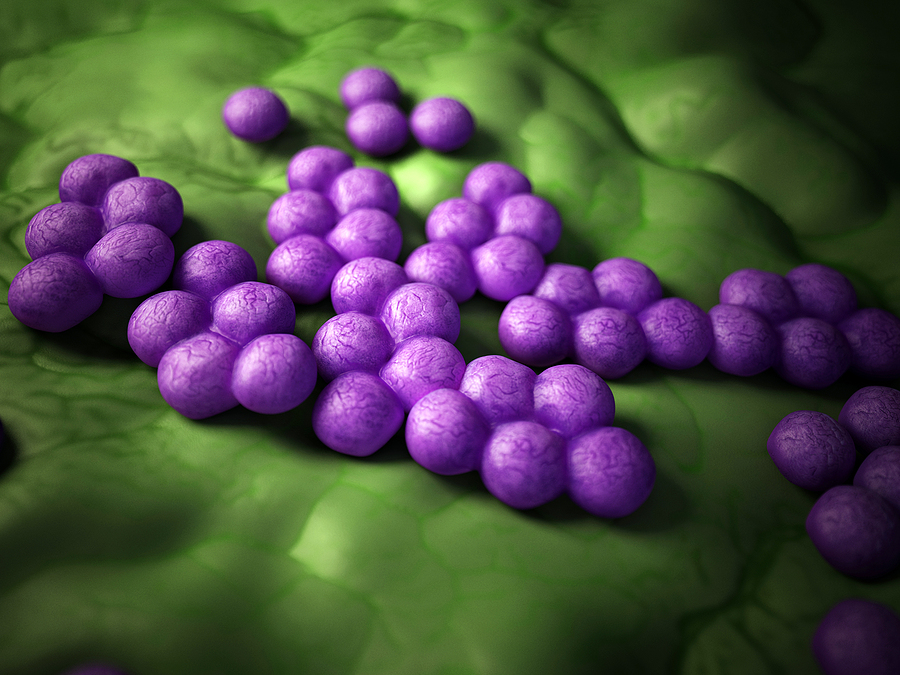
MRSA Bacteria: What It Is and How It Gets Into the Body
MRSA is a strain of Staphylococcus aureus bacteria that has become resistant to methicillin and the wider penicillin family — it is a bacterium, not a virus, and it usually enters the body through a break in the skin or a colonised nose.
Staphylococcus aureus — "staph" for short — is one of the most common bacteria carried by humans. Roughly one in three healthy people has it living quietly on the skin or inside the nose. MRSA (methicillin-resistant Staphylococcus aureus) is the version of this bacterium that no longer responds to methicillin and the wider group of beta-lactam antibiotics that doctors have relied on for staph infections since the 1960s.
The resistance is genetic. Most MRSA strains carry a gene called mecA, usually on a mobile piece of DNA called the SCCmec cassette. The gene produces an altered penicillin-binding protein (PBP2a) that antibiotics like penicillin, oxacillin, amoxicillin and most cephalosporins cannot bind to. The drugs still reach the bacterium — they simply have nothing to grab onto.
"Methicillin-resistant" is a label about drug sensitivity, not a different disease. MRSA causes the same range of infections as ordinary staph — boils, abscesses, wound infections, pneumonia, bloodstream and bone infections — but it is harder to treat, and the antibiotics that do still work are usually stronger, more expensive or given intravenously.
MRSA is a bacterium, not a virus
The confusion is understandable — MRSA hit the headlines during the same decade as SARS and H1N1 flu, and any small, contagious organism gets called a "bug". But the biology is completely different, and it changes how MRSA is treated.
Bacteria are living, single-celled organisms. They have their own cell wall, their own metabolism, and they can grow and divide on their own — on skin, in a wound, on a bed rail, in a lab dish. That is exactly what antibiotics attack: penicillins and cephalosporins block the enzymes that build the bacterial cell wall, so the cell bursts. MRSA's mecA mutation rebuilds those enzymes in a shape the drugs cannot recognise.
Viruses are not cells at all. They are strands of genetic material in a protein shell and cannot grow or reproduce outside a host cell. Antivirals interrupt the host cell's replication machinery — a mechanism antibiotics don't touch. That is why prescribing amoxicillin for flu does nothing, and prescribing Tamiflu for MRSA does nothing.
MRSA needs antibiotics that either bypass PBP2a (ceftaroline, ceftobiprole), attack a different part of the bacterium (vancomycin, daptomycin, linezolid), or target its protein-making machinery (clindamycin, doxycycline). See MRSA treatment for the full list.
How MRSA gets into the body
MRSA can live on intact skin without causing harm. Infection almost always begins when the bacterium crosses a barrier — either through broken skin or through a device that pierces one.
Breaks in the skin
Cuts, grazes, insect bites, eczema, shaving nicks and sports abrasions are the most common entry points for community MRSA. The bacterium slips into the tissue underneath and multiplies, producing the painful red lump that patients often mistake for a spider bite. Surgical wounds, IV cannula sites and drain openings do the same job in hospital settings.
The nose (nasal carriage)
The front of the nose — the anterior nares — is the single most important reservoir for Staphylococcus aureus in humans. Around 30% of people carry S. aureus there and roughly 2% carry MRSA specifically. Carriage itself causes no symptoms, but the same bacteria can be transferred to a wound by a finger, or seed a bloodstream infection if the person later has surgery or an indwelling device. Pre-surgical nasal decolonisation with mupirocin ointment is used partly for this reason.
Other mucous membranes and skin folds
The throat, groin, armpits and perineum can also carry MRSA. These warm, moist sites are harder to decolonise than the nose and are often the source of household transmission — sharing towels, razors or sports kit passes bacteria from one carriage site to another person's broken skin.
Indwelling medical devices
Urinary catheters, central venous lines, peritoneal dialysis lines, joint prostheses and pacemaker leads all bypass the skin barrier entirely. Bacteria track down the outside of the device or seed onto its surface, form a biofilm that antibiotics struggle to penetrate, and can cause bacteraemia, endocarditis or prosthetic-joint infection. This is the mechanism behind most severe hospital MRSA. See our page on invasive MRSA.
Read about invasive MRSA →Two overlapping populations of MRSA
MRSA is usually split into two overlapping groups. Healthcare-associated MRSA (HA-MRSA) lives in hospitals, nursing homes and dialysis units. It tends to affect older patients with catheters, surgical wounds or long stays, and its strains often carry resistance to several antibiotic classes beyond the beta-lactams.
Community-associated MRSA (CA-MRSA) spreads outside healthcare — in gyms, prisons, households, military barracks and sports teams — and typically causes painful skin and soft-tissue abscesses in otherwise healthy people. Many CA-MRSA strains carry the Panton-Valentine leukocidin (PVL) toxin, which kills white blood cells and drives the more aggressive skin infections seen in this group. The two populations increasingly overlap, with CA-MRSA strains now causing hospital infections and vice versa.
For a full breakdown of the named clones — USA300, EMRSA-15, ST239, ST398 and the rest — see our MRSA strains reference. How each version spreads — and how to stop it — is covered on our transmission and prevention pages.
MRSA bacteria in the news
Continue exploring MRSA
- MRSA strains
HA-MRSA, CA-MRSA, USA300, EMRSA-15 and the genetics behind them.
Read more → - Symptoms
What MRSA looks like on the skin and when it turns serious.
Read more → - Transmission
How MRSA moves between people, surfaces and settings.
Read more → - Treatment
The antibiotics that still work — and when drainage alone is enough.
Read more → - Prevention
Handwashing, decolonisation and reducing hospital risk.
Read more → - Research
Resistance mechanisms, new antibiotics and vaccine candidates.
Read more → - Can MRSA kill you?
How invasive MRSA develops and its mortality rates.
Read more →
Is MRSA contagious?
The short answer, contagious period and surface survival.
Hospitals & surgery
Hand hygiene, chlorhexidine bathing, screening and surgical prophylaxis.
At home & family
Wound care, laundry, cleaning and shared items.
Sports & locker rooms
Skin checks, covered wounds and cleaning shared gear.
Intimacy & sexual transmission
Skin-to-skin risk and when to abstain.